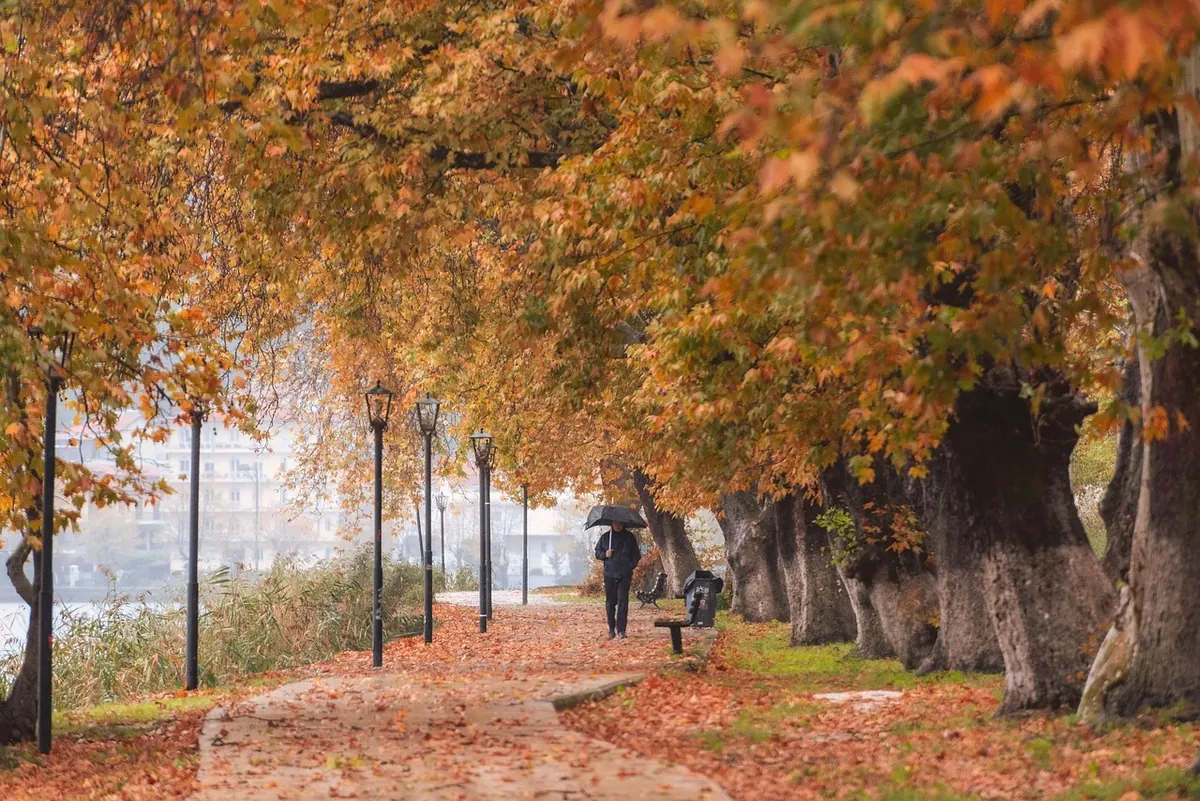
Autumn is the season that rewards photographers who stay local. The park at the end of your road changes almost weekly from late September onwards, and work made there often sits better in a portfolio than a scatter of photographs from somewhere more photogenic and further away. What follows is a practical way to think about light, colour and subjects over the next few weeks, with the aim of producing a small, deliberate set rather than a folder of pretty leaves.
Read the light before you look at the trees
October light differs from July light in ways that matter more than colour. The sun stays low all day, so shadows stretch further and the warm window around sunrise and sunset widens into something you can actually use around work or a school run. Midday, which flattens most summer scenes, becomes workable: soft, angled, forgiving.
Start with a walk and no camera. Note where the sun falls at the time you are realistically going to be free, which trees are turning first, and where the paths run east to west. That single walk will save you three wasted trips.
For backlighting, find a leaf with the sun behind it and expose for the brightest part of the frame, letting the trunk fall into near-black. Underexposing by around two-thirds of a stop usually keeps the translucent colour from blowing out. If you are unsure, bracket and choose later.
Overcast days are not a write-off. Cloud cover is a giant softbox, and it suits detail work: wet bark, leaf litter, the grain of a bench, the shine on a path. Point the camera down rather than up and the grey sky stops being a problem.
Pick one colour palette and stay with it
Autumn offers several distinct palettes and they rarely mix well inside a single set. Choose one before you leave the house.
- Gold and blue. Turning leaves against a clear sky, shot early or late. Punchy, warm, immediately autumnal. Best on bright days with a polarising filter to deepen the blue.
- Rust and green. The transition weeks, when half the canopy has gone over and half has not. Muted, earthy, good for quiet documentary frames.
- Grey and bronze. Mist, bare branches, wet stone, dead seed heads. Cool and restrained. Ideal if your portfolio already leans towards minimal work.
Sticking to one palette makes a set read as intentional rather than accidental. It also makes editing quicker, because you are matching tones instead of fighting them.
Subjects worth returning for
Trees are the obvious subject, but they are not the most useful one. The frames that hold a sequence together tend to be smaller and closer to hand.
- Individual leaves pressed onto wet tarmac, where the black surface acts as a backdrop.
- Canopy shot from directly below, with the camera flat on your back or held overhead.
- Reflections in ponds, puddles and damp benches, especially when a breeze breaks the surface.
- Fungi on rotting logs, photographed from leaf level for a low, eye-catching angle.
- Berries on hawthorn, rowan and rosehips, backlit so they glow.
- Park furniture: railings, gates, bandstands, empty benches, worn steps.
- People and dogs at dusk, reduced to shapes against a bright path.
Details and textures
Close work needs patience more than equipment. A standard lens with an extension tube will get you most of the way. Stop down to around f/5.6 or f/8 for enough depth of field, and keep the shutter at 1/250sec or faster because autumn leaves move in the slightest breeze. Early morning is calmest, and your own body makes a decent windbreak if you crouch between the subject and the gusts. Do not pick or trample fungi to get a better angle, and keep a respectful distance from wildlife, especially anything nesting or feeding.
Weather is part of the brief
Bad weather is only bad if you had a different picture in mind. Mist is the best of it: arrive before sunrise, because a thin layer of fog often lifts within half an hour of the sun clearing the horizon. Find a gap between two trunks or along a path and let the layers do the work.
Rain gives you reflections and saturation. Puddles double your compositions, and streets and paths empty out, which is a gift if you dislike crowds in frame. Wind is harder, though a slow shutter speed of around 1/4sec can turn a moving canopy into something painterly. Frost is worth an early alarm: low sun through frozen leaves is one of the few autumn subjects that genuinely cannot be faked.
In terms of kit, pack a microfibre cloth, a plastic bag for the camera, and a spare battery kept in an inside pocket, as cold drains them quickly. Thin gloves that let you work the dials are better than thick ones you keep taking off. Do check your park's rules on tripods and commercial photography, and be considerate around other users.
Edit for a set, not for each picture
Choose twelve to fifteen final frames and treat them as one body of work. Keep the aspect ratio consistent, and resist the urge to push saturation on every orange leaf. Warm colours clip quickly in editing, so pull the reds and oranges back in your HSL panel and check the brightest highlights on a backlit frame before you export. A neutral white balance across the set will do more for coherence than any preset.
Then sequence it. Open wide to establish the place, move into details, and finish on a frame that gives the set somewhere to rest. Vary the distance between shots so the viewer's eye keeps moving.
One afternoon, one lens, one idea
Pick a single idea, such as backlit leaves against dark trunks, or reflections after rain. Take one lens, a 35mm or 50mm, and give yourself ninety minutes, arriving about forty minutes before sunset. Shoot sixty to eighty frames, then select five.
Next week, go back to the same few metres of park and do it again with a different idea. Two or three visits to one small place will give you a series that looks considered, seasonal and unmistakably yours, which is worth far more in a portfolio than a hundred images from a hundred locations.
Photo: johnNaturePhotos / Pixabay